En resumen
Puntos clave
- ✓El vitíligo no es contagioso
- ✓Puede comenzar a cualquier edad
- ✓A menudo intervienen mecanismos autoinmunes
- ✓La evolución es individual
- ✓La valoración dermatológica es importante
What happens in the skin?
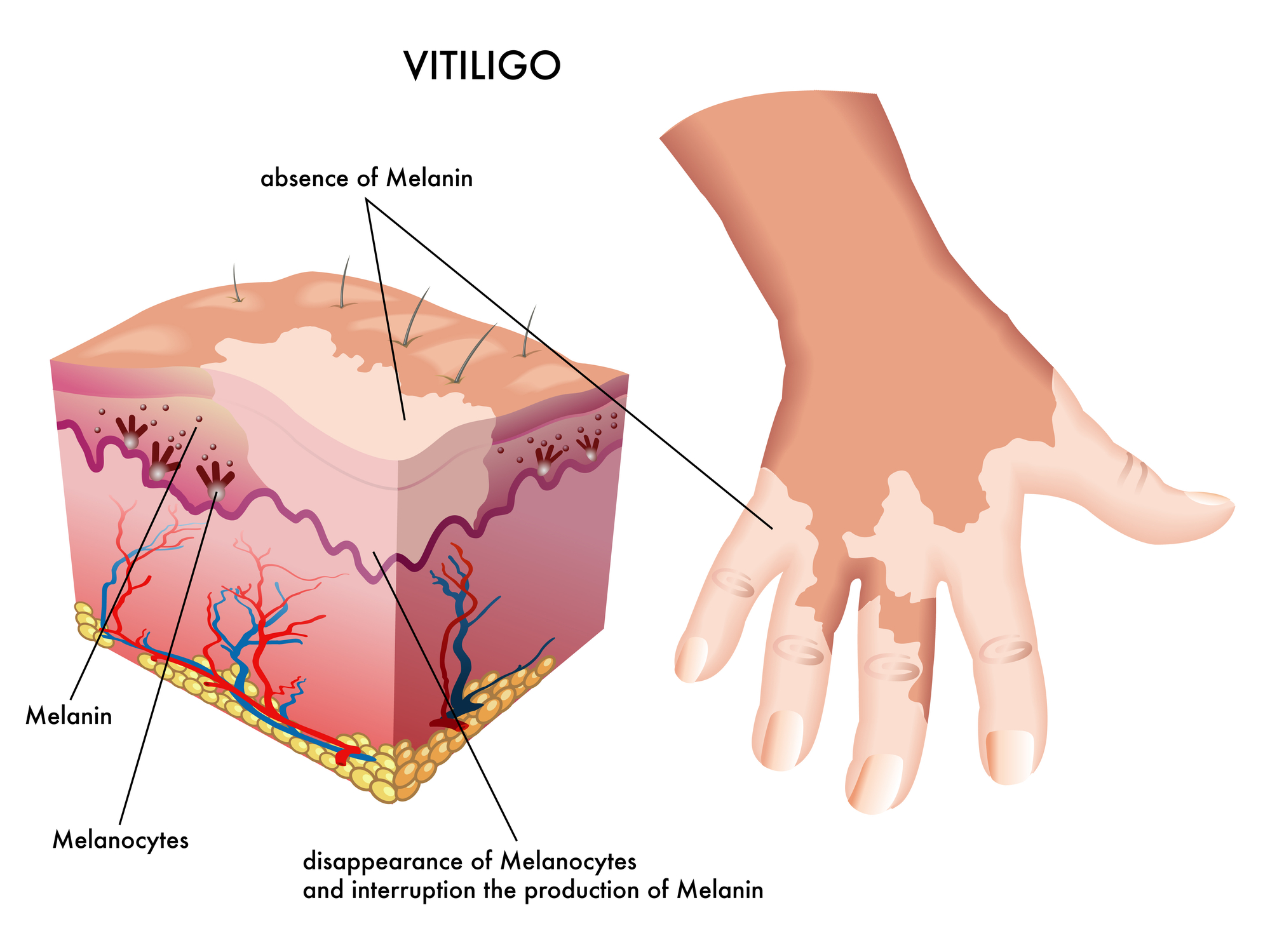
Melanocytes make melanin, the pigment that contributes to skin colour. In vitiligo, functioning melanocytes decrease in defined areas and the skin loses colour.
Current evidence points to several interacting processes, including an immune response directed against melanocytes, genetic susceptibility, oxidative stress and local factors.
Which forms are recognised?
Non-segmental vitiligo is the most common form and often affects both sides of the body. Segmental vitiligo usually follows a more localised, one-sided pattern. Mixed forms are less common.
- Non-segmental: often bilateral or symmetrical
- Segmental: usually unilateral and regional
- Mixed: features of both forms
- Extent and activity are assessed separately
Why seek medical advice?
Several conditions can cause pale patches. Examination helps confirm the diagnosis, assess activity and discuss suitable goals.
Vitiligo is not life-threatening, but depigmented skin is more sensitive to UV exposure and the visible change can have a substantial emotional impact.
Editorial basis: AWMF S2k guideline on the diagnosis and treatment of vitiligo, register 013-093, version 2.0 dated 27 July 2026, valid until June 2031. Sources reviewed on 2 September 2026.
Las fuentes se citan en el texto; los enlaces comerciales solo llevan a páginas IDEALDERM aprobadas.