In brief
Key points
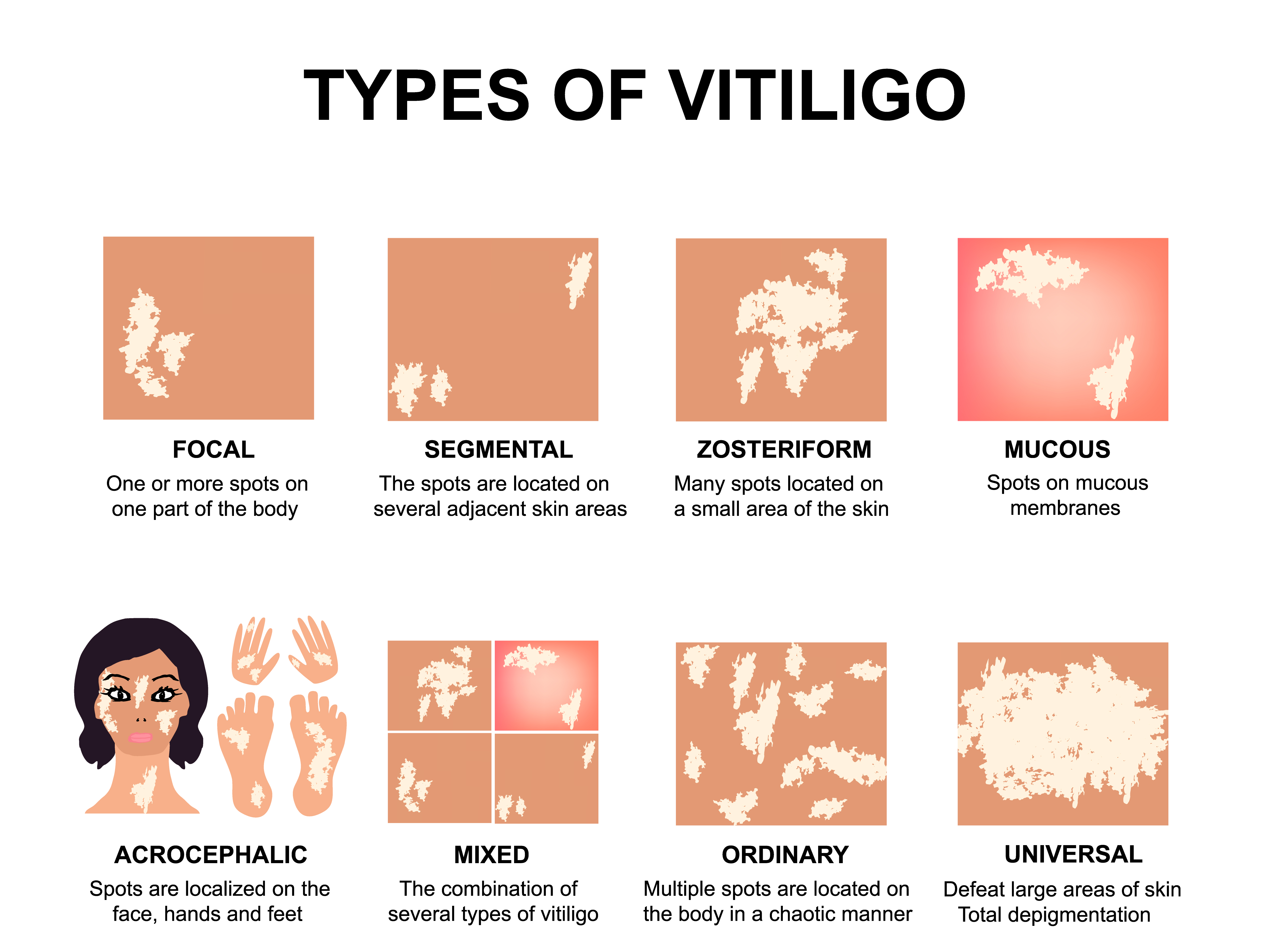
- ✓Non-segmental is most common
- ✓Segmental is usually one-sided
- ✓Mixed patterns occur
- ✓Extent is assessed separately
Non-segmental vitiligo
Patches often affect both sides of the body and may be approximately symmetrical. Activity can alternate with stable periods.
Segmental and mixed forms
Segmental vitiligo follows a one-sided regional pattern and often begins earlier. Mixed vitiligo combines segmental and non-segmental features.
Editorial basis: current AWMF S2k guideline on the diagnosis and treatment of vitiligo, register 013-093, version 2.0 dated 27 July 2026. Reviewed on 2 September 2026.
Commercial links are limited to approved IDEALDERM product information.